Be built (to last).
The right supplements can help you recover naturally and build a resilient body.

Supplement Quiz
Take this short quiz to discover the perfect supplements for your needs and goals.
About SaltWrap

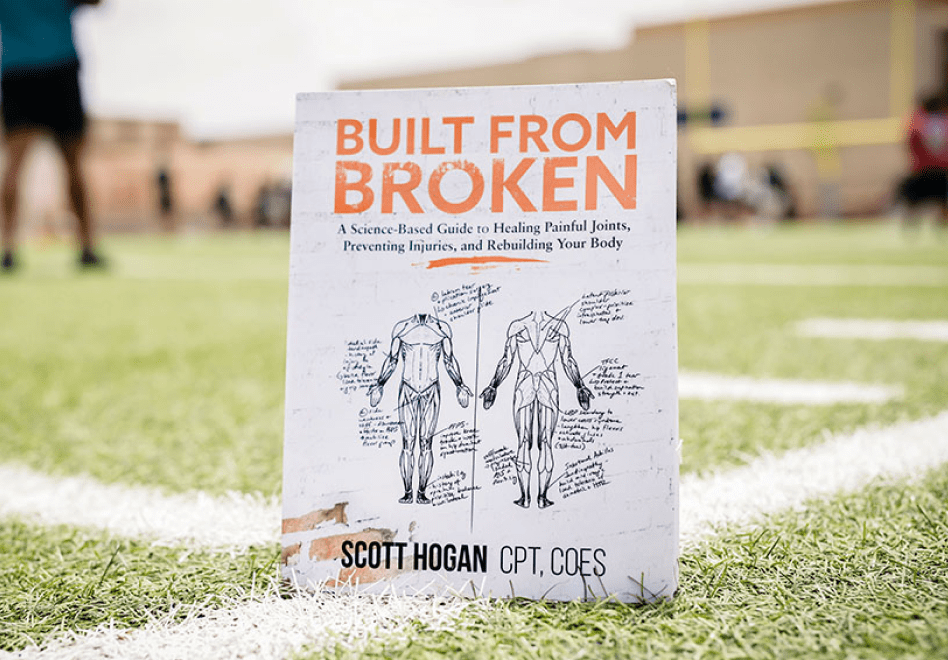
Built from Broken
Get the best-selling book from SaltWrap founder, Scott Hogan, and start rebuilding today.
Clinical Advisory Board: 2025 End of Year Update
By Joe Zagami
At the beginning of this year, we checked in with the SaltWrap Clinical Advisory Board to see what they had planned for 2025.
Now, with 2025 nearly in the books, it's time for a quick End of Year Update — and a look at the year ahead.
Here’s what they had to say:

Dr. Ro Mahajan, MD
Board-Certified Pain Physician
This year, I wanted to learn more about the mind-body connection as it relates to chronic pain. I had many patients over the last year who really stood out to me as needing help in this regard, and I was able to delve deeper in an effort to help them better understand their pain.
Mary, whom I talked about in a previous post, was one of the highlights. She continues to do well overall and is finding a way to manage her pain with shockwave and continued efforts at mind-body strategies.
While working with patients this year, I have seen two consistent themes emerge regarding the mind-body connection: Fear and hope.
For many patients who struggle with chronic pain, when the pain becomes all-encompassing and paralyzing, fear is at the center of their thought process.
Fear about the longevity of their symptoms.
Fear about their life changing in ways they don’t want it to.
Fear about how to continue to live in their newfound state.
Fear about being a burden to others.
When I get to the root of that fear with a patient, it helps them see how it is their fear, and not just the pain, that is amplifying the issue. This doesn’t solve the problem, but it helps to reframe it. And it’s a step in the mind-body direction.
In a similar way, I have realized that hope is almost as powerful as a drug or treatment itself.
When I work with a patient and show them the strategies available to them, their eyes light up. I can see the tension release from their body. They move easier than when they came into the clinic. They feel better before we even begin the actual treatment.
To some degree, they are aware of this as they thank me for giving them hope, and they look forward to the future.
These observations about fear and hope support the idea that the mind is powerfully connected to the body and our physical ailments, particularly pain.
The takeaway is that if we can understand and harness our mind, we can impact our pain and function.
On a personal note, I took some steps to better my own health this year.
I bought a treadmill, and, more importantly, I actually started using it!
I decided instead of jogging, I would walk on an incline to reduce impact. I have felt more energized throughout the day and have been getting better sleep as well.
I also started to use the vibration plate for post-treadmill stretching, and it has been a nice complement.
My biggest goals for the coming year are to:
-
Increase the number of hours I sleep. I routinely get about 6 hours of sleep, but I know that if I can push for 7 or 8 hours, I may be in a better position to delay cognitive decline down the road.
-
Enjoy more time outside of work with my family. I bring home a lot of work, and I am trying to improve my work-life balance by bringing less work home so I can enjoy the everyday moments.
-
Check in on my general health with my regular doctor. It has been a while... Doctors are notorious for being the worst patients!
Alaina Curry, DPT
Doctor of Physical Therapy, NSCA CSCS, and Former NCAA All-American Athlete
As the year draws to a close, it’s time to pause and reflect on the journey of 2025 while gearing up for what’s ahead.
In 2024, I shared my journey overcoming a debilitating back injury, which provided profound insights that continue to inform my practice as a physical therapist.
These core principles — prioritizing mental health alongside physical recovery, seeking diverse medical support, and emphasizing nutrition’s critical role in healing — have yielded significant benefits. I hope you have incorporated these concepts into your daily life, enabling you to address challenges with enhanced resilience and a comprehensive approach to well-being.
Building upon this foundation, I have continued mental health practices such as gratitude exercises and meditation, which have kept me grounded during the busy seasons.
Collaborating with professionals, colleagues, and personal networks has expanded my methodologies, fostering more effective rehabilitative outcomes.
Furthermore, optimizing nutrition through balanced diets and smart supplementation has expedited recovery for both myself and my clients, highlighting the essential function of proper nourishment in supporting the body’s restorative mechanisms.
However, as I progressed through the year, I identified a key element that needed attention.
I have long advocated for movement, often citing the motto “motion is lotion.” Yet, it is the quality of movement that truly sustains long-term health.
Precision in execution and targeted strengthening are vital for injury prevention. I am grateful to have discovered Classical Pilates, which directly addresses these aspects. I recently completed my Level I Instructor Course and will advance to Level II in the new year.
This pursuit is enhancing my expertise in fostering superior movement quality and mind-body connection, thereby elevating clients’ overall wellness and resilience against injuries.
Stay tuned for my next blog in 2026, where I’ll dive into movement quality — what it truly means, how Pilates refines it through better patterns and postural resilience, and its power in preventing and healing injuries.
Wishing you a prosperous New Year!

Chris Dempers, ASCM-EP®
Medical Exercise Specialist
As the year ends, we often focus on missed goals instead of recognizing our achievements, but it's important to adopt a more positive mindset and appreciate what we've accomplished so far.
It’s OK to reflect on any unachieved goals, of course. But it’s important to reevaluate them rather than just dwell on them. Perhaps they were too ambitious, or maybe your approach needs some adjusting.
If you are having a hard time determining how to set attainable goals, consider using the scientific method to evaluate whether your current strategies are effective.
Here's how proper goal setting parallels the scientific method:
-
Observe: Identify what you want to change (e.g., weight, performance, energy).
-
Question: Ask if improvement is possible.
-
Hypothesis: Predict if lifestyle changes — like modifying your workouts or diet —will help.
-
Test: Start making the changes and do your best to hold yourself accountable.
-
Record: Track your workouts and your progress. Measure your macros and record your weight. Get bloodwork done. The more data you have available, the better.
-
Analyze: Let the data do the talking. Look at the trends over time. But don’t neglect the changes that are harder to quantify empirically, like your overall sense of well-being and energy levels along the way.
-
Conclude: Assess what worked or didn't, compare outcomes with predictions, and adjust as needed.
The nice thing about this method is that it allows for modifications throughout your journey. You should never feel stuck in this process. Always allow room for error and learn to pivot to make any necessary adjustments.
Think of this as a new lifestyle habit, not just a temporary change. Otherwise, you risk repeating steps and never feeling like you are where you want to be.
Here’s the most important takeaway: Whether you’re trying to reach new levels of performance or simply want to get back to where you used to be, change takes time.
“Quick fixes” and shortcuts rarely work out in the big picture. Some can even be unsafe if you don’t know the long-term effects.
But at the end of the day, celebrate the small victories more and be willing to learn from the methods that didn’t work. Stay curious, and you will enjoy the journey a lot more.
If you have goals to reach in the new year, SaltWrap is here help you achieve them.
Whether you're looking for expert insights from our Clinical Advisory Board, useful and actionable information from our blog, award-winning Therapeutic Sports Nutrition™ formulas in the SaltWrap Store, or a step-by-step blueprint for rebuilding your body and unlocking maximum performance, we’re honored to be a part of your journey.
With SaltWrap in your corner, the tools you need to come back stronger are always within reach.