

Be built (to last).
The right supplements can help you recover naturally and build a resilient body.

Supplement Quiz
Take this short quiz to discover the perfect supplements for your needs and goals.
About SaltWrap
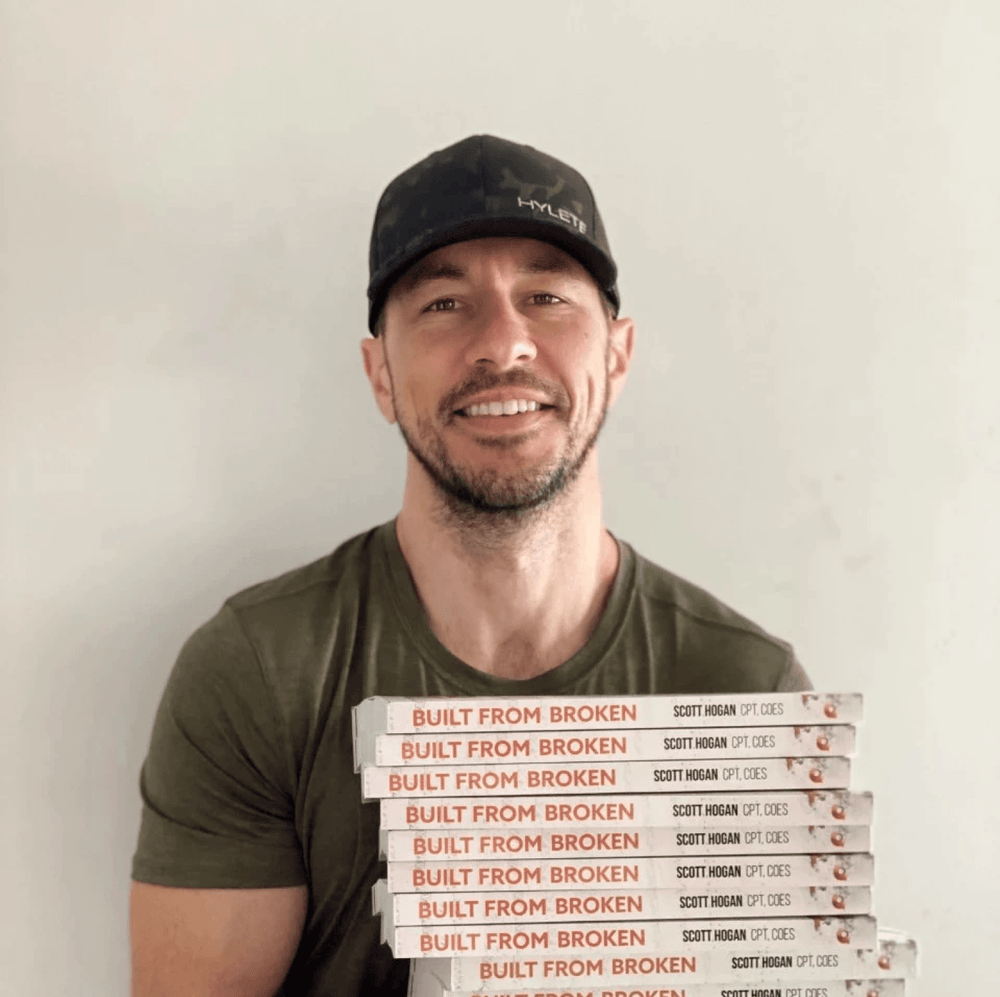
Built from Broken
Get the best-selling book from SaltWrap founder, Scott Hogan, and start rebuilding today.
What Conventional Wisdom Gets Wrong About Tendinopathy (And How to Fix It)
By Nick Lucius, DPT, SCS, CSCS
After a decade in the world of high-performance orthopedic and sports physical therapy, you start to see what we are doing well… and what we are not.
The world of tendon rehabilitation and performance falls into the latter category.
One reason for this is that tendon injuries are typically dismissed as simple or less life-altering problems to fix. (Tendinopathy is not exactly something that keeps most patients up at night.) Most people think a little rest or a few weeks at a run-of-the-mill physical therapy clinic will fix the problem.
It’s easy for clinicians to get caught up chasing the latest technological advances in treatments or trendy modalities with minimal results. When we do this, we often either fail to meet patients’ expectations or otherwise fail to deliver results. In some cases, both.
Why does this happen?
In my opinion, we fail to focus on what really makes tendons work and what leads them to break down in the first place.
In this article, I’ll show you why the best approaches to optimizing tendon recovery and performance are the ones that respect their mechanics — and focus on pragmatic lifestyle changes to help give your tendons the best possible healing outcomes.
The Simple Approach to Optimal Tendon Healing
In the modern era of elaborate self-performative exercises on social media, we sometimes lose track of what can help in the short term for optimizing tendon performance and healing.
Put another way, as with many things in life, “complicated” doesn’t always mean “better.”
In fact, with tendons, research consistently shows the simplest approaches are often best for optimal recovery outcomes.
For instance, a recent study at the University of Delaware examined the effects of using a simple heel wedge — a simple piece of foam inserted into your shoes — on 20 subjects with insertional Achilles tendinopathy (IAT) for six weeks.
This type of tendinopathy is an overuse injury. It generally causes activity-related pain and stiffness, and sometimes swelling, in athletes and older people. If left unresolved, it typically leads to difficulty walking. To the point where it can impair physical activity and diminish quality of life.
Every subject was over 35 years old and experiencing some degree of localized pain, swelling, or stiffness at the tendon-bone junction. But regardless of their individual symptoms and circumstances, they all had a significant degree of difficulty walking because of their IAT.
Not only did researchers find that the use of heel wedges significantly reduced pain during walking immediately, but it also improved subjects’ symptom severity and gait after two weeks.1
While this might not seem like a groundbreaking development at first glance, it shows that using a simple heel wedge helped keep subjects moving and control strain on the tendon.
This allowed their tendons to calm down enough to be properly loaded. And that’s when optimal healing can truly begin.
In other words, simply paying attention to the proper mechanics of the tendons was enough to make significant improvements. No overcomplication — or elaborate exercises — necessary.
What the Tradational Paradigm of Tendon Recovery Gets Wrong
I recently had the pleasure of attending the Traverse City Tendon Summit earlier this summer. One of the most profound talks centered around assumptions clinicians have made in the assessment and treatment of tendinopathy.
Dr. Seth Barton discussed how the traditional paradigm of tendon formation, injury, and healing simply is not up to snuff.
The traditional paradigm tells us the following things:
-
Tendons do not heal. Once injured, the rest of the tendon must take on the stress of the load upon it.
-
Rehabilitation exercises and programs must be function-focused to help your whole body move well.
Let’s tackle each of these in sequence.
First, the classic notion that tendons do not heal.
You may have heard of the “jelly donut” model of tendon injury. This comes from the original framework where the “donut” represents the healthy tendon and the “donut hole” represents the pathological tendon tissue.
This framework shows that the donut hole does not improve, and that your focus should be on making the donut — the remaining healthy tissue — as robust as possible.
Unfortunately, this does not properly describe how tendons change with intentional loading.
For instance, one study that followed Australian football players given a focused tendon protocol over the course of a five-month season found that it improved the fibular alignment of their Achilles tendons.
In short, purposeful loading over a five-month period didn’t just make the “donut hole” smaller. It improved the quality of the entire “donut.”2
Here’s a look at the longitudinal ultrasound images researchers collected during the study:
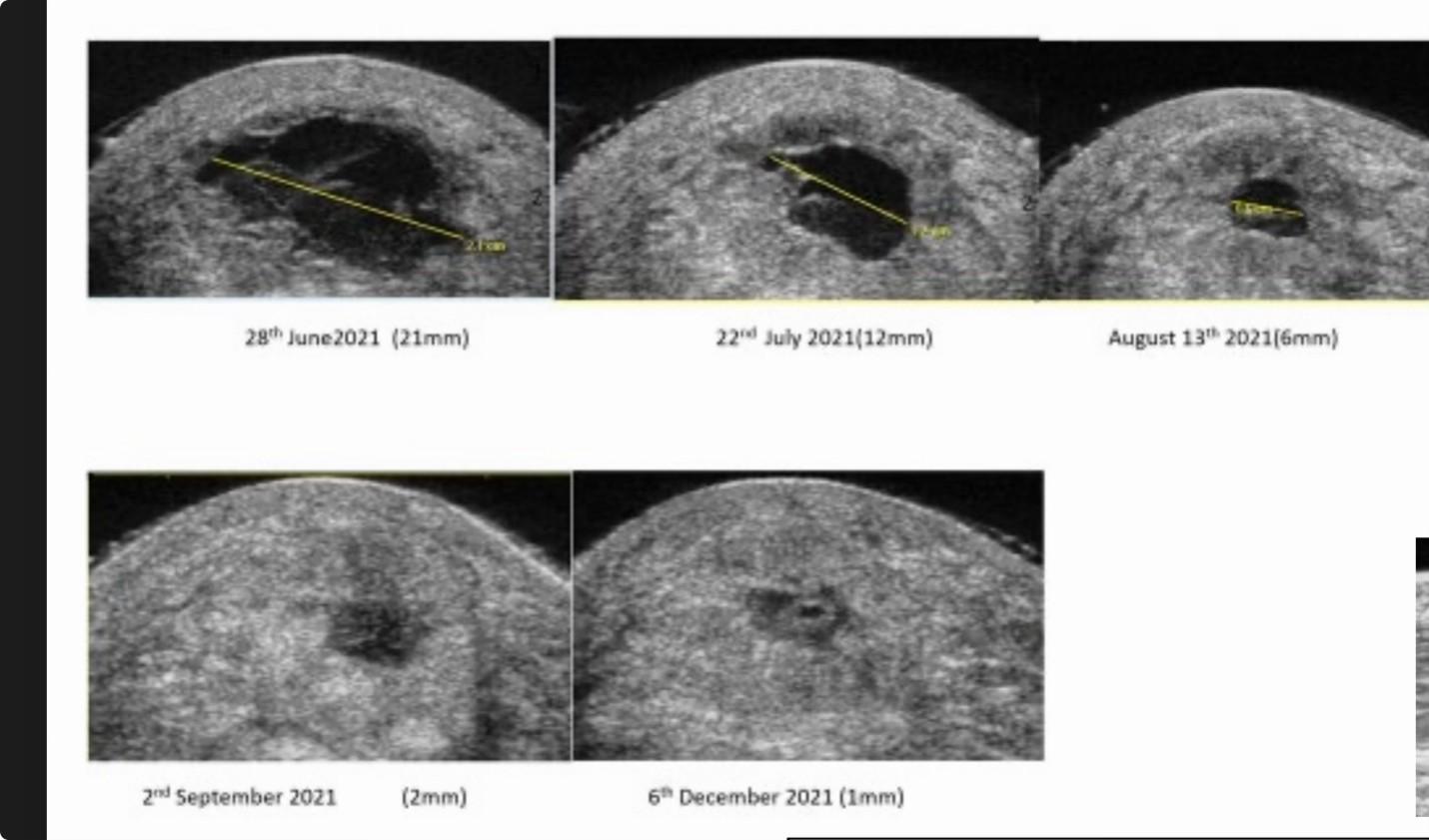
You can see that, as time progresses, the darkened area — the unhealthy “donut hole” — gets smaller. Not only that, but it is replaced by strong, healthy tendon tissue!
Why Tendons Need Stress for Optimal Healing
“Function” in the physical therapy world is a funny term.
We use it to describe what the patient can do. But somewhere along the way, we seemed to focus too heavily on a term we use called “regional interdependence.”
This describes the idea that you must treat above and below the injured area for the whole chain to work optimally.
This is a great concept. The problem is that many clinicians seem to have forgotten that the primary site of the injury is the one that needs specific loads most to help with healing.
Without this key piece of the healing puzzle, you’re likely only allowing the injured site to calm down somewhat before you go back to your activity, only to risk reaggravating it prematurely.
The symptoms might have improved. But sufficient healing is another story.
Tendons have a remarkable ability to protect injured areas when under duress. (This is a concept called “stress shielding,” and it’s worth another article in the future.)
The challenge is that if we do not provide sufficient stress to properly stimulate the injured tendons, then we don’t signal to our bodies that they need to heal.
For instance, lifts that are performed too quickly and/or without sufficient weight don’t even begin to stress the tendons. You might be stimulating the surrounding healthy tissue, but this can quietly dig the hole you’re in even deeper.
Simple, repetitive, and appropriately loaded exercise is the only way to truly “speak” to the tendon.
So, when you exercise or rehabilitate a muscle, I challenge you to look at it through a new lens. One that is intentionally stimulating the tissue to adapt to better handle future stress.
In many ways, your body is only as tough as what you put it through.
My Best Practical Advice for Optimal Tendon Healing
If you want my best advice for optimal tendon healing, here it is: Give yourself some grace.
Understand that this journey probably won’t be one of smooth and gradual improvement. Instead, it will be a hero’s journey based on doing “small things” properly and often.
Clinicians and patients alike tend to think of a tendon injury as a simple thing. But your tendons need more than rest to come back stronger. Your goal is to actively rebuild tissue. Ideally, the goal should be to rebuild it with a new level of fortitude so that you can keep doing awesome things.
That’s no simple task. And it’s one that I feel gets overlooked many times because tendon injuries are a different animal than fractures or standard post-operative rehabilitation.
The good news is that there are practical ways you can help tendon tissue heal optimally. One of the best ways is to work with an experienced clinician.
I recommend finding an exceptional orthopedic physical therapist with extensive experience with tendon injuries. Treat the process like you’re interviewing a prospective employee. Ask them about their experience and approach to treating tendon injuries. You may even wish to discuss some of the terms and concepts from this article.
If you don’t have anyone who fits the bill in your area, online consultations are becoming increasingly more accessible. You should have no problem finding qualified, experienced tendon experts who can help you build a program that allows you to come back stronger.
Before you consult with a clinician, I recommend having the answers to three important questions ready.
Three Questions to Answer Before Seeing a Clinician
-
Is the pain consistent? Does the pain improve after warming up? Or does it stay the same no matter how much you move?
-
What activities are you still able to perform with this pain? The more specific details you can provide, the better. For instance, walking might be easy, but climbing stairs may be very painful.
-
Have you tried a basic tendon-loading approach to warming up prior to exercise? Try performing three sets of 15-second static holds at the mid-range of your available range of motion for the affected area. Does performing these tendon-loading exercises improve the pain at all?
Having the answers to these questions will help any clinician you work with hit the ground running when it comes to treatment. They are simple data points. But they will empower you with a firm foundation on which to begin your healing journey.
Putting It All Together
When it comes to rehabilitating injured tendons, even the most qualified clinicians can fall short.
To me, this is because the conventional wisdom surrounding the treatment of tendon injuries — especially the idea that injured tendons should avoid loading to heal properly — gets it wrong.
The latest research shows us that this is not the case. Rather, tendons need adequate load to be stimulated to heal.
Once you understand this — that stress helps build resilience — you’ll be on the right path to recovery. And by working with a qualified and experienced clinician, you’ll set yourself up with the treatment plan you need to come back stronger.
If you’re interested in virtual consultations to build a curated tendon program, I’d be happy to help.
Simply click the button below for more information about booking a virtual consultation with me.
Nick Lucius, DPT, SCS, CSCS
Nick Lucius earned his Doctorate in Physical Therapy from the University of Michigan in 2015 and has since built a diverse career converging the fields of orthopedics, neurological rehabilitation, and sports science and performance.
Nick currently serves as the physical therapist for a professional hockey team and provides concierge care for patients of all walks of life. He also recently founded SISU MOVE, a software company that creates data-driven movement solutions to help patients and clinics maximize their care and outcomes.
If you'd like to book a virtual consultation with Nick, go here to learn more.