Be built (to last).
The right supplements can help you recover naturally and build a resilient body.

Supplement Quiz
Take this short quiz to discover the perfect supplements for your needs and goals.
About SaltWrap

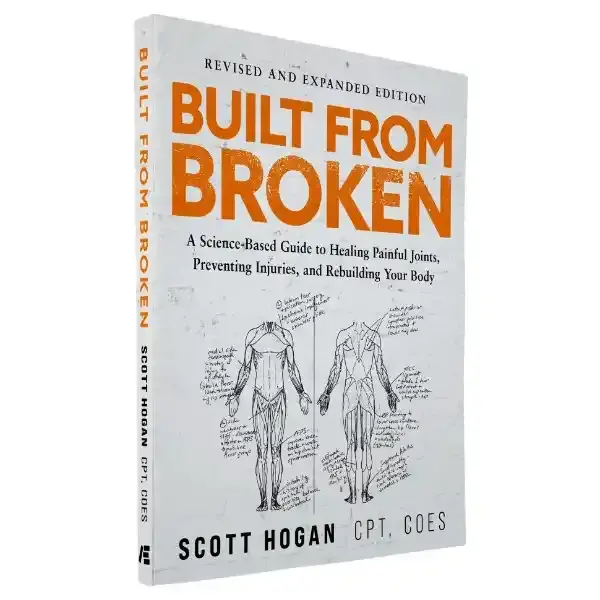
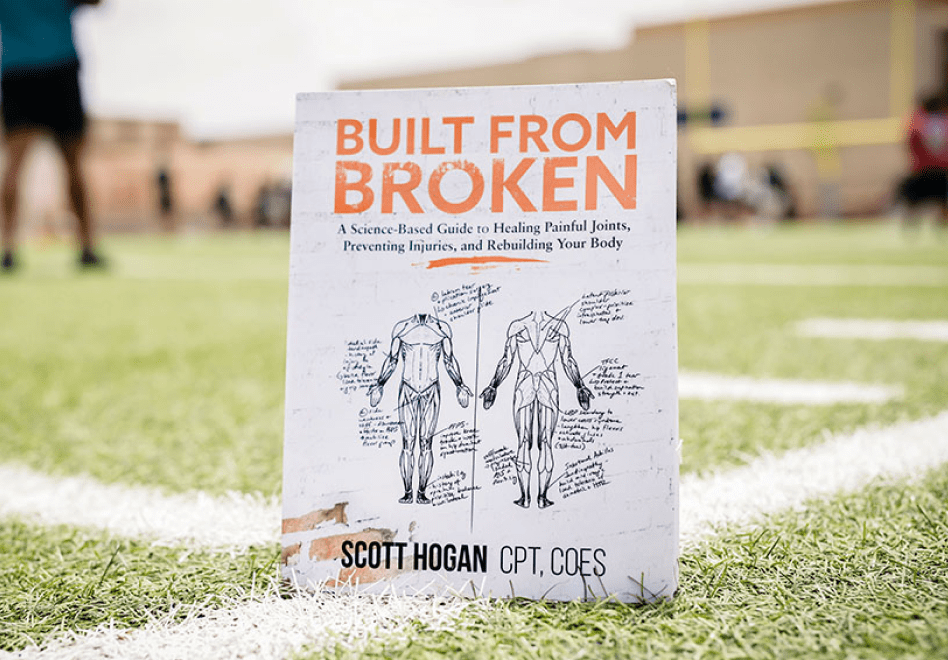
Built from Broken
Get the best-selling book from SaltWrap founder, Scott Hogan, and start rebuilding today.
Heavy, Slow Resistance Training: The “Cheat Code” for Joint Pain Relief

by Scott Hogan, ACE-CPT, COES
Most people think joint pain starts inside the joint itself.
But for most athletes and active people, what we experience as joint pain begins in the tendon, or the myotendinous junction, where your tendon connects to your muscle.
Believe it or not, this is a good thing. Here’s why: It lets us utilize a natural solution that’s so effective, it’s like a cheat code for healing joint pain.
I’m talking about heavy, slow resistance training.
In short, it utilizes very slow repetition speeds to help realign collagen fibers in your tendons and help rebuild the microscopic damage that can accumulate over time.
It’s a lot more difficult than it sounds. Yet just about anyone can do it. Best of all? When it comes to healing joint pain, heavy, slow resistance training tends to work fast.
Here’s how to do it.
Heavy, Slow Resistance Training for Joint Pain Relief
The main idea behind heavy, slow resistance training is to take your normal exercises and slow down the repetition speed. Instead of moving the weight up and down for about one second each, you would use a five-count up and a five-count down.
Let’s use a simple dumbbell bicep curl as an example.
In this case, you would curl the weight up for a five-count. Then you would pause at the top of the movement for one second. Finally, you’d lower the weight for five seconds, returning to the starting position when you reach five.
Fitting this approach into your workouts is easy. But trust me, performing your exercises this way is more challenging than it sounds.
While you can use heavy, slow resistance training on just about any weight-bearing exercise you’d normally perform, I recommend you reduce the weight significantly to get started.
Again, let’s use the dumbbell bicep curl as an example. If you can normally curl 30-lb dumbbells, in this case, you might want to start with 15-lb dumbbells. Because of the slower cadence, you’ll be spending more time under tension.
Even though the weight being used is significantly lighter, by the time you’re nearing the end of your set, your muscles will be screaming.
The key to heavy, slow resistance training is to use a weight that allows you to keep your form strict and controlled for 10-12 repetitions. If you can get more reps than that, then it’s time to increase the weight.
Doing this regularly will help realign collagen fibers that have started to wear down and can turn into scar tissue. It’s also a great way to be proactive about optimizing tendon performance while helping to prevent issues like tendinitis.
Final Thoughts
When performed properly, heavy, slow resistance training acts like a cheat code for healing joint pain. It’s a simple approach, but it should still feel challenging.
One of my favorite things about heavy, slow resistance training is that you don’t have to retool your entire workout plan.
Try dedicating just one session per week to heavy, slow resistance training. Perform the exercises you normally would, but with lighter weights and a slower cadence.
When you do, you’ll likely start to notice that your joints feel more comfortable during normal training sessions — and even in the days following your workouts.
One more thing: If you want a roadmap for rebuilding your body pain-free, check out my award-winning and bestselling book, Built from Broken.
In it, I give you the step-by-step blueprint for healing joint pain, building resilience, and coming back stronger.
When you utilize the science-backed principles and workouts in Built from Broken — including heavy, slow resistance training — you'll have virtually everything you need to build lasting resilience and optimal performance.
Click the button below to learn more.