
Be built (to last).
The right supplements can help you recover naturally and build a resilient body.

Supplement Quiz
Take this short quiz to discover the perfect supplements for your needs and goals.
About SaltWrap

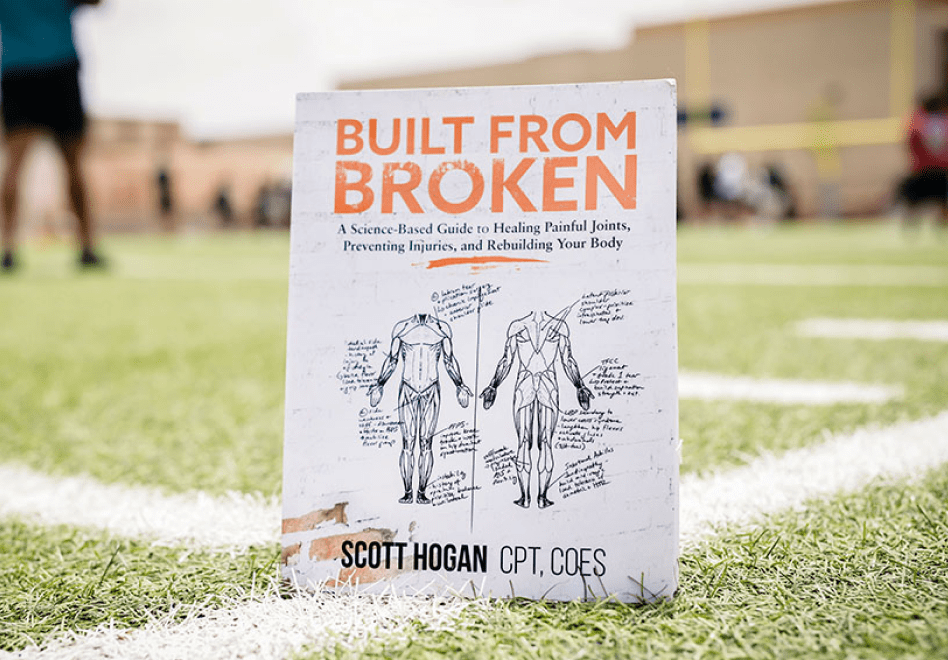
Built from Broken
Get the best-selling book from SaltWrap founder, Scott Hogan, and start rebuilding today.
How Isometrics Reduce Pain & Boost Resilience

By Alaina Curry, DPT
Just about every active person experiences some degree of muscle pain and stiffness at some point in life. Whether from exercise, playing sports, recovering from an injury, or simply starting a new activity, your muscles are bound to face soreness, stiffness, and fatigue.
There’s no shortage of ways to deal with this problem. From drugstore solutions — like topical analgesics — and heating pads to deep-tissue massage and other assisted options.
They all have their place. But there’s a technique you can do yourself today to help relieve muscle pain and tension.
It’s a technique that can help increase mobility after muscle or tendon injury, support the healing process by promoting proper collagen alignment, and even help your muscles perform better over time.
I’m talking about isometric muscle contractions, or isometrics.
In this article, I’ll show you how these isometric muscle contractions can reduce pain, support recovery, improve mobility, and help build stronger, more resilient muscles and tendons.
What Is an Isometric Muscle Contraction?
An isometric contraction occurs when a muscle contracts statically — without changing length or creating any movement.
For example, if you pause halfway through a biceps curl and hold the weight in place, your biceps are working isometrically to maintain that position.
How does this translate into improved healing, mobility, and performance?
Physical therapists use a variety of isometric-based “Muscle Energy Techniques” to help reduce pain, improve mobility, promote tissue healing, and build strength.
I’ve been trained to apply these techniques manually with my patients. Yet many of the same principles can be applied to self-treatment.
Here’s how you can use them today based on your fitness goals.
Isometrics for Reducing Pain & Improving Mobility
The common mainstream advice for relieving stiff and sore muscles is that stretching is the best solution. And while stretching has its place, in this case, it’s not the best answer.
Instead, you can get practically immediate muscle relief by contracting them isometrically.
By holding resistance for 5-10 seconds in a pain-free range, the body triggers a protective reflex known as Autogenic Inhibition.
The nervous system automatically signals the muscle to relax in response to high muscle tension. This often results in an immediate reduction in pain and stiffness.
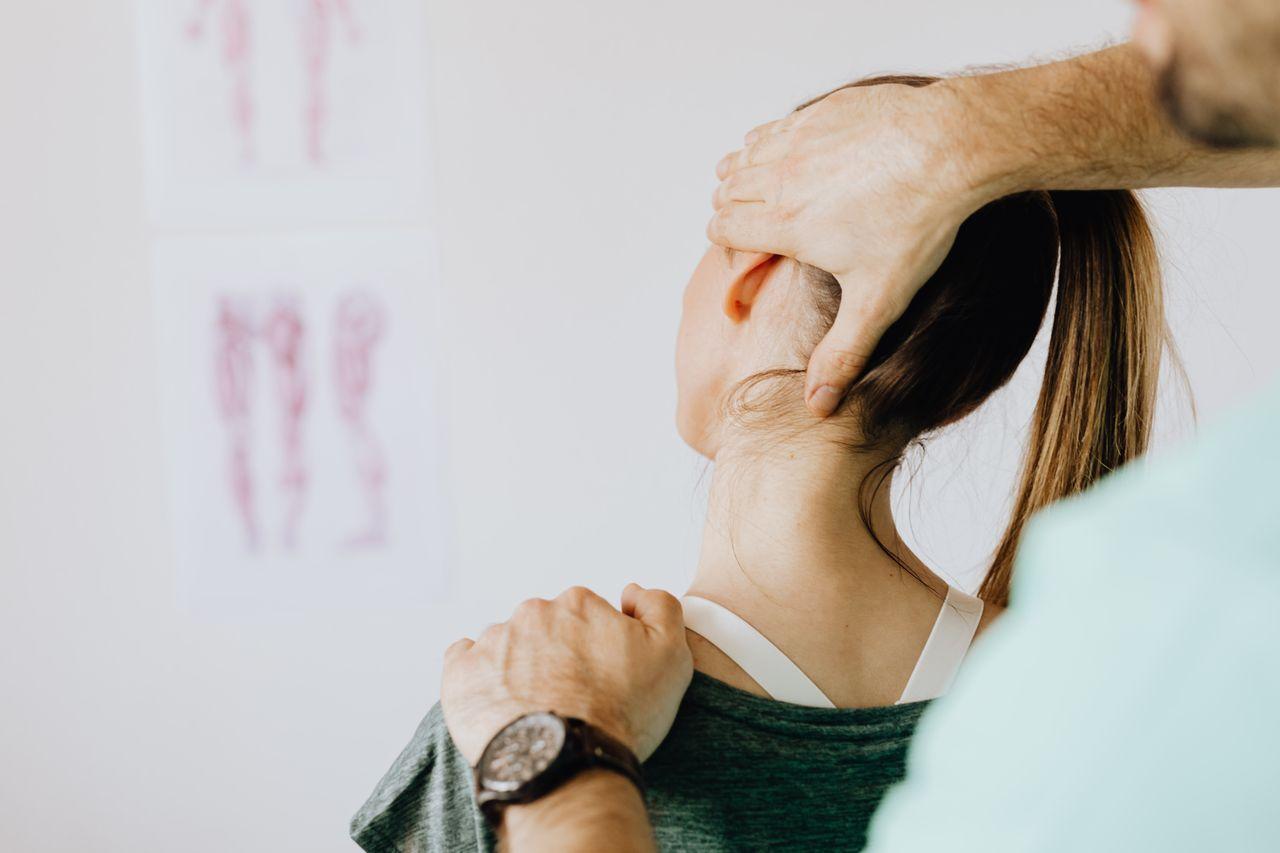
I’ve had many physical therapy clients come to me with a chronically stiff neck. If they tried to move it in a certain direction, they felt sore and tight. In these cases, I wouldn’t just stretch their neck for them.
Instead, I would use gentle resistance to create isometric contractions of the neck muscles in the direction that felt restricted.
For example, if turning their head to the right is painful or tight, I will have them turn their head just before the point of that discomfort. Then I’ll apply light resistance with my hand while they gently attempt to turn their head, meeting my resistance without moving.
After holding this for about 5-10 seconds and repeating it a few times, they often see an immediate improvement in neck mobility and a notable reduction in pain.
I’ve also had many physical therapy clients come to me with a new, acute onset of a stiff and painful neck. They may say something like, “I slept funny and woke up with a kink in my neck. I can barely turn my head without pain.”
If it is acute and painful, they cannot tolerate contracting those muscles to turn their head in that painful direction.
In this case, I use a technique called Reciprocal Inhibition.
Instead of contracting the tight, painful muscle, I will contract the opposing muscle on the other side of the joint. Our body’s automatic reflex causes the joint's opposing side to relax.
In this example, I will have a client turn their head as far as they comfortably can toward the painful side, then meet my hand’s resistance by turning their head in the opposite direction. This creates an isometric contraction of the opposing neck muscles, thereby relaxing the muscle(s) on the restricted side.
With just these simple techniques using our body’s nervous system, the joint will move more easily and with noticeably less pain.
These same principles can be applied to other areas of your body as well.
Reciprocal Inhibition is used more commonly by therapists for acute injuries and/or joint pathologies that restrict range of motion.
More commonly, you can use Autogenic Inhibition — an isometric contraction of the problem muscle — to reduce pain and increase mobility.
For instance, if you have a tight hamstring, you might raise your leg straight into a stretch just before the point of discomfort, and gently contract the hamstring against resistance for 10 seconds before relaxing, and then repeat this for a few reps.
This is a muscle energy technique coined “Contract-Relax.” Every time you relax, you move a little further into the joint and contract again, improving mobility in the muscle and joint.
You can do this lying on your back with a strap around your foot, or with your leg against the corner of a wall you can push your leg against to contract.
As a physical therapist, it’s important for me to mention that you should not create pain with these self-applied techniques.
Any discomfort in the muscle should improve with light-resistance isometric contractions. It does not take much force to achieve these bodily reflexes.
In other words, go easy.
Think of the isometric contraction like a gentle message to the part of your brain that’s linked to your muscle tension and pain, telling it, “Hey, it’s OK to relax now!”
Isometrics for Improving Tissue Healing
If you’ve ever torn a muscle or tendon, had orthopedic surgery, or had any surgery that cut through muscle, you've probably worked with a physical therapist on Light Isometrics.
It’s another evidence-based muscle energy technique that uses fewer reps and longer holds — up to 30 seconds or longer — and is almost always performed by a trained clinician.
A light isometric contraction of the injured muscle or tendon signals the cells to lay down more collagen in the direction of the applied stress. This helps both heal and strengthen the tissue.
However, if you’re someone who may have scar tissue or limited mobility from a previous surgery more than a couple of years ago, that buildup will likely limit the benefits of using this technique.
That said, it’s safe for you to try light isometric exercises around the joint to help improve joint integrity and strength. However, if you are newly post-op or rehabbing an acute injury, it is best to seek a trained clinician to perform these techniques appropriately.
Isometrics for Building Strength
The benefits of isometric muscle contractions don’t end with rehabbing and rebuilding your body. Isometrics play an important role in building overall strength and power output, as well as muscular endurance, joint stability, and even correcting muscle imbalances.
When injury is no longer a limiting factor, isometric exercises can be progressed by increasing resistance or extending the hold duration.
High-intensity maximal efforts recruit fast-twitch muscle fibers that are responsible for speed and explosiveness. Longer-duration holds activate slow-twitch muscle fibers to support muscular endurance.
This is why physical therapists love utilizing isometrics. Applied correctly, you can improve both power and endurance.
I love the benefits of isometric strength training so much that I often use it myself.
If my goal is to improve my lower-body strength and power for sprinting or playing soccer, I would pause and hold resistance during an exercise using free weights or machines.
For example, holding the bottom position of a weighted split squat for 20-30 seconds creates significant tension in the quadriceps and glutes while reinforcing joint stability and building strength in a sport-specific position.
In my physical therapy practice, I frequently use isometrics to help address muscle imbalances and improve postural endurance.
Building upon the neck pain examples, especially if it’s recurring, there is usually a need to strengthen the deep neck flexor muscles.
It’s common for many people to experience weakness and fatigue in these muscles due to spending hours each day looking down at their phones, computers, etc. A specific exercise to effectively strengthen these postural neck muscles is the “Chin Tuck,” where you gently retract the head and hold it isometrically for 5-10 seconds a few times.
Isometric muscle contractions are unique because they allow you to generate high levels of muscle tension with minimal to no joint movement. This makes them a valuable tool not only during rehabilitation, but also for active individuals looking to proactively improve their strength, power, and joint health.
Putting It All Together
Isometrics are a powerful yet often underutilized tool for building resilience. While they can be extremely helpful in rehabilitative phases, their benefits can be translated to active people who want to proactively build strength and resilience.
Done properly, isometrics can help you reduce pain, improve mobility, build strength, and support tissue healing.
If you want a step-by-step program for how you can safely add isometric training into your workout routine, you'll find that in Scott's bestselling corrective exercise book, Built from Broken.
While you can certainly self-administer many of the modalities you’ve seen here with great results, you may want to consider seeking the guidance of a trained clinician in your area to get started.
In my private practice, Rejuve-U, we bring world-class physical therapy to your doorstep via in-home manual therapy and corrective exercise services. These include concierge physical therapy services for post-op recovery as well as performance, longevity, and active aging programs.
While we primarily serve patients in Palm Beach, Florida, we also offer virtual consultations and guided exercise sessions to patients across the U.S.
Our telehealth visits focus on movement analysis, corrective exercise, and customized programming.
If you’d like more information about Rejuve-U, click the button below.

Alaina Curry, DPT, CSCS
Alaina Curry is a founding member of SaltWrap's Clinical Advisory Board and one of South Florida’s most in-demand physical therapists.
A lifelong athlete and former NCAA All-American in Women’s Soccer, she became a Certified Strength and Conditioning Specialist to help athletes of all ages come back stronger – and unlock peak performance – after injuries.
Today, Alaina treats a diverse clientele wanting to lead an active, pain-free lifestyle. If you’re interested in becoming a potential client, go here now to learn more.