

Be built (to last).
The right supplements can help you recover naturally and build a resilient body.

Supplement Quiz
Take this short quiz to discover the perfect supplements for your needs and goals.
About SaltWrap

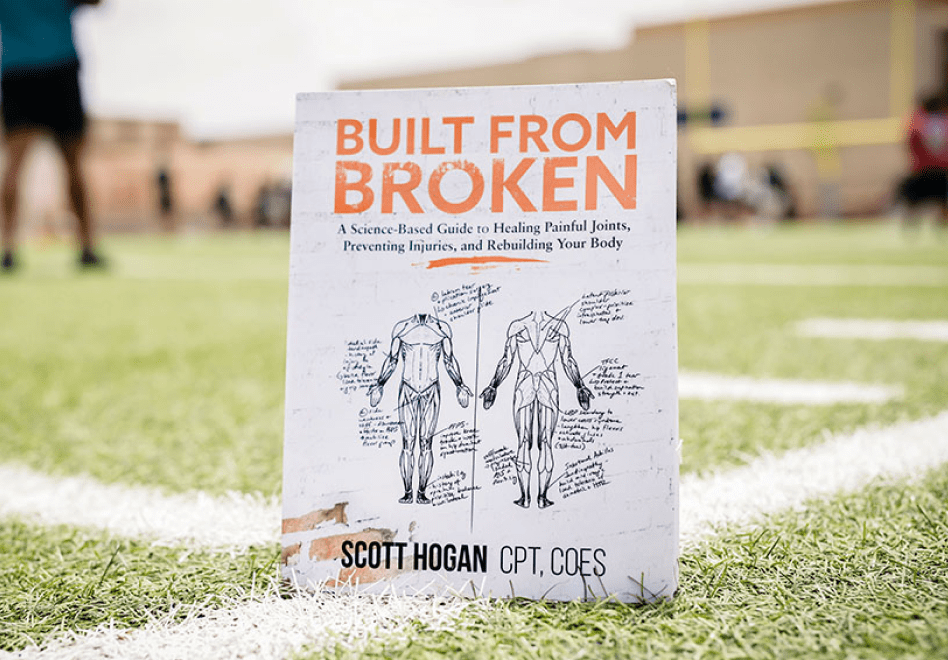
Built from Broken
Get the best-selling book from SaltWrap founder, Scott Hogan, and start rebuilding today.
The Right Way to Return to Exercise After Injury or Time Off

By Chris Dempers, ASCM-EP®, MES
Just about every athlete and active person faces time off from exercise at some point.
Whether due to injury, major life changes, schedule adjustments, or just shifting priorities, we’ve all asked ourselves the question, “Where do I start?” when it comes to returning to exercise.
I have asked this question many times.
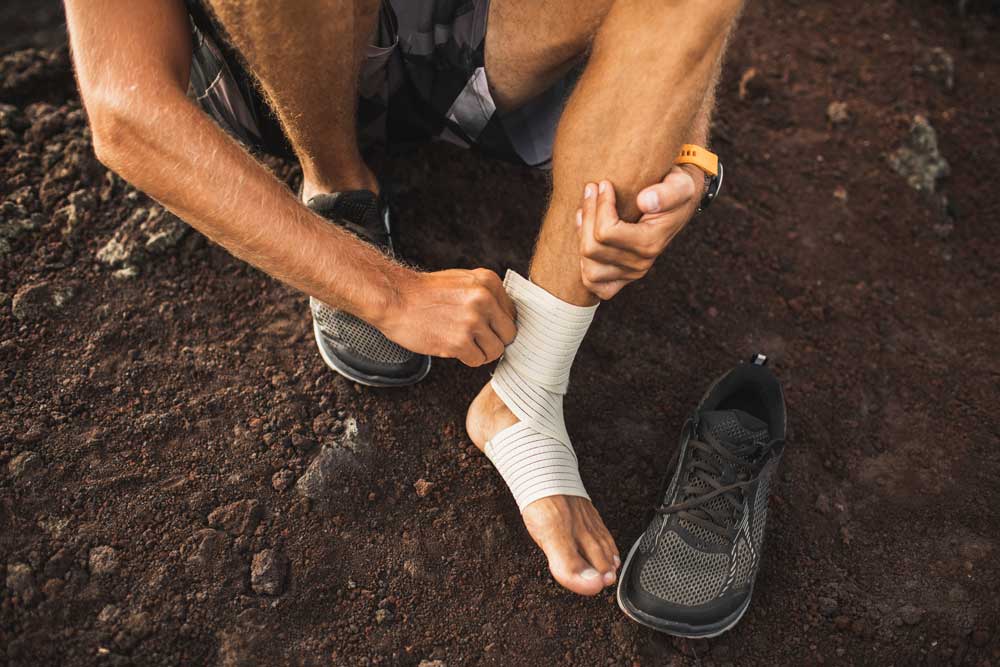
Sometimes it has been because of an acute injury I’ve had to deal with.
Other times, it has been because of life getting in the way.
For instance, I recently started a business that is physically demanding, but not in the same way as performing traditional exercise.
Whatever your reason for asking where to start, the answer is almost always the same:
Start back at the beginning.
Why Start at the Beginning?
This is often the best course of action for safely testing your limitations without risking injury or re-injury.
The last thing you want is to experience a setback when you’re just starting up again.
It might seem obvious, but it’s worth stating clearly:
If you have taken months or years off, your body will not be accustomed to what you once did.
And if you are coming back from an injury, then it’s even more important to slowly find out where your limitations are.
While getting back into exercise can seem daunting at first, let’s start with some good news: Your body has not lost its motor learning, or muscle memory.
Muscle memory deals with movements and skills you have developed over time. It allows you to reproduce the movement with minimal focus and attention required. These skills become second nature. Once you know how to ride a bike, you always know how to ride a bike, right?
When you have taken time off or come back from an injury, the skills might still be second nature. But you’ll want to be cautious and apply extra focus to proper mechanics (including cadence and form) to ensure a smooth transition.
That said, it’s important to set realistic expectations right from the start.
For instance, even if you’re an elite runner, you will not be able to jump right back into marathons — or even push yourself with a strenuous run — when you first return to running.
However, if you’re willing to humble yourself a little bit and start back at the beginning, you will more than likely see optimal — and lasting — results.
How to Start at the Beginning
When you’re recovering from an injury, starting at the beginning allows you to resume movement and activity while still allowing your injury to continue healing.
For instance, simply focusing on range-of-motion (ROM) exercises during a recovery phase can be very beneficial.
Plus, this allows you to focus on other imbalances you may have that often present themselves only when we pay extra attention to the fundamentals of movements.
Every movement requires a specific set of muscles to work together. But sometimes a few of those muscles can overpower or overcompensate while others are underutilized.
Focusing on strict, correct form — often with little or no weight — allows proper motor learning to occur. This will translate into better performance with loaded exercises when you’re ready.
Here’s how to do it:
Start Slow
Just stepping foot into a gym or fitness center can be a huge win for some people. Meanwhile, others can’t stand being away from it. No matter which camp you’re in, you’ll want to start off easy with some low-intensity cardio, stretching, and mobility exercises.
You will want to slowly increase intensity over the next month while allowing your body to adjust to the routine of being back in the gym. While it seems straightforward enough, your muscles and tendons need to re-learn how to receive different inputs and stressors that have not been placed on your body for weeks, months, or even years. The longer you have been away, the slower you should take things.
We are creatures of habit, so if you are used to sitting and doing little to no activity, then that’s what your muscles and tendons are used to doing, too. Anything new might cause them to freak out a little bit at first.
This is why delayed onset muscle soreness (DOMS) can be very intense if you overdo it when you first get back. Some soreness is normal, but struggling to move the next day is not. So, start slow.
Treat your comeback like a marathon, not a sprint.
Focus on Fundamentals
This is where you want to be after about two or three weeks back, depending on how long you have been away from exercise.
This does not mean you have to take up Olympic lifting or anything like that. I’m talking about basic movement fundamentals, focusing on bodyweight and even low-weight movements, such as squats (chair squats are ok as well), pushups (modified if needed), bird dogs, and other basic core stability exercises.
If you want to add weight machines into this phase, make sure you can complete the full range of motion the exercise requires. If you can’t, then it’s best to stick with bodyweight modifications until you can perform the full range of motion with bodyweight exercises before moving to machines.
Don't Push Too Hard
I can tell you from working with hundreds of clients over the years — and from my personal experience — that if you push too hard too early, you will be right back at the beginning of your recovery process before long.
For instance, after my shoulder injury, I pushed the limits too early. The result? I was right back in surgery to repair what had just recently been fixed. (Even if they’re your friends, as in my case, surgeons generally don’t like having to repair the work they already did.)
So, take it from me: Listen to your body, your trainers, your rehab professionals, and doctors when they tell you not to overdo it.
As you get a few months into your routine without any setbacks, you can start to increase the intensity a little bit each week. Always listen to your body, because it will let you know when it’s had enough.
While it’s not a good idea to work until failure at this point, mild soreness in the days after a workout is a good indicator that you adequately and appropriately pushed your body more.
In terms of workout programming during this period, a full-body workout 3x a week is sufficient for the average person who exercises for longevity and quality of life.
If you were used to working out every day, make it a goal to aim for. But don’t rush into it.
Be happy with the small victories and stay safe while doing it.
And speaking of celebrating the small victories, this next strategy dovetails with that perfectly.
Reframe Your Thinking
Here’s where most people get hung up: Just because you’re starting over at the beginning does not mean it will take forever for you to get back to pre-injury levels of performance.
Rather, this will allow you to return to those levels with a lower risk of setbacks.
I’ve seen it many times: Those who try to rush back into things too quickly — and have not corrected their form, allowed proper healing time, or given enough attention to muscle imbalances — often face reinjury, worsen their injuries, and even cause potential long-term damage depending on their specific injury.
Take your time. Focus on fundamentals. And keep collecting small victories until you’re back to where you want to be.
Putting It All Together
If you have taken a long break and are getting back into things, then starting at the beginning is not a punishment. It is a preventative measure to help those muscles and tendons become familiar with certain movements again.
In the end, it will help you reach your fitness goals faster than rushing back into things. Plus, it will help diminish the risk of injury.
Starting slow will help reacclimate your mind and muscles to being back in the gym and making exercise a regular part of your routine. In this race, slow and steady always wins.
Focusing on fundamentals will help mitigate your risk of re-injury, which we always want to avoid. It can also help correct any inefficiencies or imbalances in your movement patterns, which could lead to a lower risk of injury — and optimal gains — in the future.
Finally, not pushing yourself too hard will allow you to come back stronger in the long run rather than sidelining yourself — again — because you were in a rush for results.
Chris Dempers, ASCM-EP®, MES
Chris Dempers, ASCM-EP®, MES, runs the health and fitness department for a South Florida hospital chain that specializes in medical fitness. His specialties include orthopedic injuries, fall prevention and balance with aging populations, and fitness protocols for Parkinson’s patients.
Chris is a founding member of SaltWrap's Clinical Advisory Board.