

Be built (to last).
The right supplements can help you recover naturally and build a resilient body.

Supplement Quiz
Take this short quiz to discover the perfect supplements for your needs and goals.
About SaltWrap

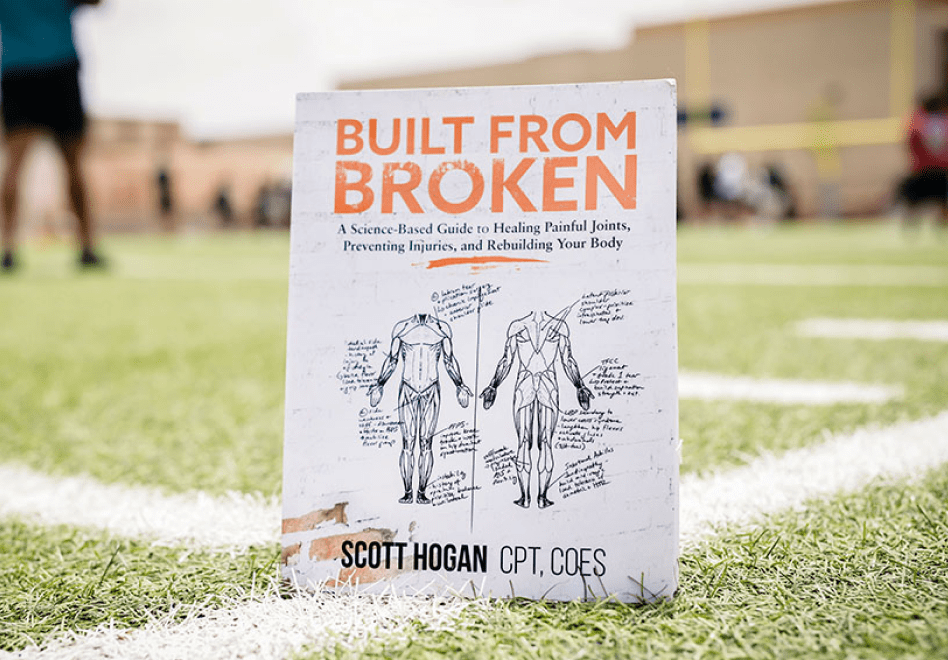
Built from Broken
Get the best-selling book from SaltWrap founder, Scott Hogan, and start rebuilding today.
7 Simple Ways to Prevent Workout Plateaus

By Chris Dempers, ASCM-EP®, MES
In my last article, I detailed three simple solutions for getting out of a workout plateau.
I’m glad that readers found it useful. But many readers wanted to know what they could do to help avoid workout plateaus — the stalling of progress in the gym — in the first place.
It’s a great question.
After all, even pro athletes at the highest levels get stuck in workout plateaus from time to time. And once again, the good news is that there are a few small and simple changes that you can make — regardless of experience level — to keep progressing.
Here are seven simple ways to prevent workout plateaus.
Use Proper Progressive Overload
Progressive overload is a time-tested method for anyone whose main goal is to build overall strength. But many people don’t approach it the right way, because they think it only involves adding significantly more weight or repetitions to your lifts.
Instead of making large jumps in weight or volume, the correct approach to progressive overload focuses on small, steady increases over time. That might mean adding a little more weight (even if that means 2.5 lbs.), completing an extra repetition or two, or adding another set when your body is ready.1
The idea is to keep progressing from session to session.
This steady, gradual progression gives your muscles and tendons time to adapt safely. It can help you build strength without pushing too hard, overtraining, or constantly taking every exercise to failure.
This method is especially useful for younger athletes because it supports strength development at a controlled pace while their bodies are still growing.
It is also a smart approach for older lifters, especially those returning to the gym wanting to rebuild strength — but while reducing the risk of overuse injuries from doing too much too soon.
Add Time Under Tension
Time under tension refers to how long your muscles are working during each repetition. Slowing down a movement keeps the muscles and tendons under load longer. This can help build strength while reducing the sudden stress that comes from rushing through the exercise.
A simple way to apply this method is to use a slow count during each repetition. Let’s use five seconds as an example. This would involve a five-second concentric (positive) portion of the lift, followed by a one-second pause, and ending with a five-second eccentric (negative) portion of the lift.
To use a machine chest press as an example, that means taking five seconds to fully push the weight away from you, followed by a one-second pause, and then five seconds to return the weight to the starting position.
Now, 10 total seconds under tension might not sound like a lot. But after just a few complete reps, it might start feeling like an eternity. That’s why this approach requires some experimentation with weight selection at first.
The right amount of weight will vary from person to person, so start significantly lighter than usual, perhaps half of your normal working weight, and focus on control. Really feel the muscles working through each phase of the lift.
Implementing this approach can help you stay focused on proper form, improve technique, and make each repetition more intentional.
Adjust Your Rest Time
Adjusting rest time is one of the best ways to increase or decrease workout intensity.
Longer rest periods can help you keep your strength more consistent from set to set. For instance, powerlifters will routinely take five minutes between sets on exercises like deadlifts or squats. This can be a great way to facilitate strength progression on more demanding compound movements.2
However, shorter rest periods between sets can add a cardiovascular challenge to your weight training because your heart rate stays elevated for longer.
If you are used to resting for about two minutes between sets, moving to a 30-second rest period will feel much more demanding. Start by adjusting the weight as needed while your endurance improves. This helps you maintain proper form and avoid rushing through each portion of the movement.
Remember, this adjustment is to the rest time only. It doesn’t mean speeding up the movements themselves. Unless you are doing Olympic lifts or more explosive movements, you want to keep your pace steady.
Plus, if you don’t enjoy traditional cardio workouts, or find yourself in a time crunch, shorter rest periods can be a practical way to improve conditioning while still focusing primarily on building strength.
Vary Your Exercises
Another simple way to keep progressing is to vary the exercises you use for the same target muscle groups. For example, you might switch from a barbell bench press to a dumbbell press, or from a lat pulldown to pull-ups.
These variations still train the same primary muscles. But they challenge different stabilizing muscles. This helps create better balance across the muscles, tendons, and joints involved in the movement.
Changing exercises can also keep your workouts fresh and more engaging.
Repeating the same movements for too long can become boring. This alone may limit your progress because your workouts might start to feel stale.
More importantly, it can hinder overall function because your body is only adapting to a narrow range of movement patterns. And if you do this for too long, it could eventually lead to a plateau.
Prioritize Rest and Recovery
Rest and recovery are essential for muscle development and long-term progress. When you train hard without giving your body enough time to repair, you increase the risk of overuse injuries, lingering aches, and reduced performance.
Depending on the intensity and structure of your workouts, consider adding one to two days of active recovery each week.
Active recovery can include light movement such as stretching, walking, or easy cycling. These activities help keep blood flowing and the lymphatic system moving, which supports the body’s natural recovery processes.
Passive recovery — taking a full day off — is also important, especially after very strenuous workouts or when you are dealing with minor aches and pains. This type of recovery gives your body time to focus on repair without adding extra physical stress.

Add Deload Weeks
Deloading gives your muscles, tendons, and ligaments a planned opportunity to recover. It is especially useful when your body starts showing signs that it needs a break from heavy or high-volume training.
You may benefit from a deload week if muscle soreness lasts longer than usual, your strength declines, or your workouts feel slower, heavier, and harder to complete. These signs can indicate that your body is under more stress than it can recover from between sessions.
Depending on workout intensity, you might want to schedule a deload week every six to eight weeks.
An easy way to deload is to reduce the weight, volume, or intensity of your workouts over the course of a typical week’s worth of training.
For example, you can try lowering your weight to about 40–60% of your one-rep max and reduce the number of sets and reps you normally perform. You can keep doing familiar exercises while using lighter loads.
The goal is to keep moving, maintain good technique, and reduce strain so your body can recover and come back stronger.
Stay Consistent
In this case, consistency refers both to your workout schedule and how you perform exercises.
When you are learning a new exercise or technique, your body may feel less coordinated at first because it is still developing the pathway for that movement. During this stage, use lighter weight and focus on proper form to reduce the risk of injury while your technique improves.
The more consistent you are with an exercise, the more natural and efficient the movement becomes. Optimizing movement efficiency places less unnecessary strain on muscles, tendons, ligaments, and joints. It also paves the way for increased intensity and progressive overload.
Patience and consistency can help you become a stronger, more capable athlete, while also avoiding downtime from preventable injuries.
When it comes to consistency in your workout schedule, plan as much as possible ahead of time. This includes both training and rest days so you can stay on track with your goals, recover properly, and maintain long-term progress.
You might think that repetition is what leads to plateaus. But I’d argue that consistency in how you perform exercises — and sticking to your workout schedule — opens the door for progressive overload, which is perhaps the single best way to avoid plateaus in the long run.
Putting It All Together
As I’ve said before, plateaus happen to the best of us. Nobody likes getting stuck in one. But that doesn’t mean they can’t be avoided. Thankfully, there are plenty of tools at your disposal for doing just that.
Using proper progressive overload is one of the biggest levers you can pull if you want to come back stronger session after session. It’s not about chasing new personal records. It’s about increasing intensity — a little more weight, an extra set, one more rep — incrementally with every workout.
Increasing time under tension is a great way to challenge your muscles while also building stability.
Adjusting your rest time between sets allows you to change the intensity of your workouts with minimal effort and maximum reward. More rest helps preserve strength for challenging lifts. Less rest means increased emphasis on conditioning.
Varying your exercises is a simple way to keep things fresh while also prioritizing different stabilizing muscles and fostering balance between your muscles, tendons, and joints.
Prioritizing rest and recovery doesn’t just help you avoid unnecessary setbacks. Active recovery days keep you moving and help you come back stronger for your next workout.
Adding a deload week into your workout programming is one of my favorite ways to give your muscles, joints, and nervous system some much-needed relief — without spending a week on the couch.
Finally, staying consistent in both your execution of exercises and your workout schedule sets the stage for progressive overload — the incremental improvement required for coming back stronger.
Give these strategies a try, and I’m sure you’ll notice better performance in and out of the gym.
Chris Dempers, ASCM-EP®, MES
Chris Dempers, ASCM-EP®, MES, runs the health and fitness department for a South Florida hospital chain that specializes in medical fitness. His specialties include orthopedic injuries, fall prevention and balance with aging populations, and fitness protocols for Parkinson’s patients.
Chris is a founding member of SaltWrap's Clinical Advisory Board.